Project Narrative
Scenario 2 - Cleaning With Coconuts (Thurs-18)
For Project 2, our team worked on a filtration concept to remove microplastics and microbeads (about 10-20 um radius) in a wastewater treatment scenario.
The challenge was balancing performance with sustainability: filtration effectiveness, durability in wet conditions, practical cost, and responsible end-of-life handling.
After comparing materials, running porosity calculations, and using a decision matrix, we selected coir fiber as the best overall fit for our design goals.
Project Objective
Build a realistic, sustainability-aware filtration concept that reduces microplastic release from wastewater while still meeting engineering constraints.
Results at a Glance
Target Particle Range
We designed around microplastic/microbead capture in the approximate 10-20 um radius range for Scenario 2.
Selected Material
Coir fiber was selected after MPI screening and decision-matrix evaluation, with strong balance across performance, cost, and sustainability.
Eco Audit Insight
Transportation energy showed up as a major lifecycle factor, which reminded us that sustainability decisions go beyond just the material itself.
Project Visuals
What We Delivered
Filter Material Selection
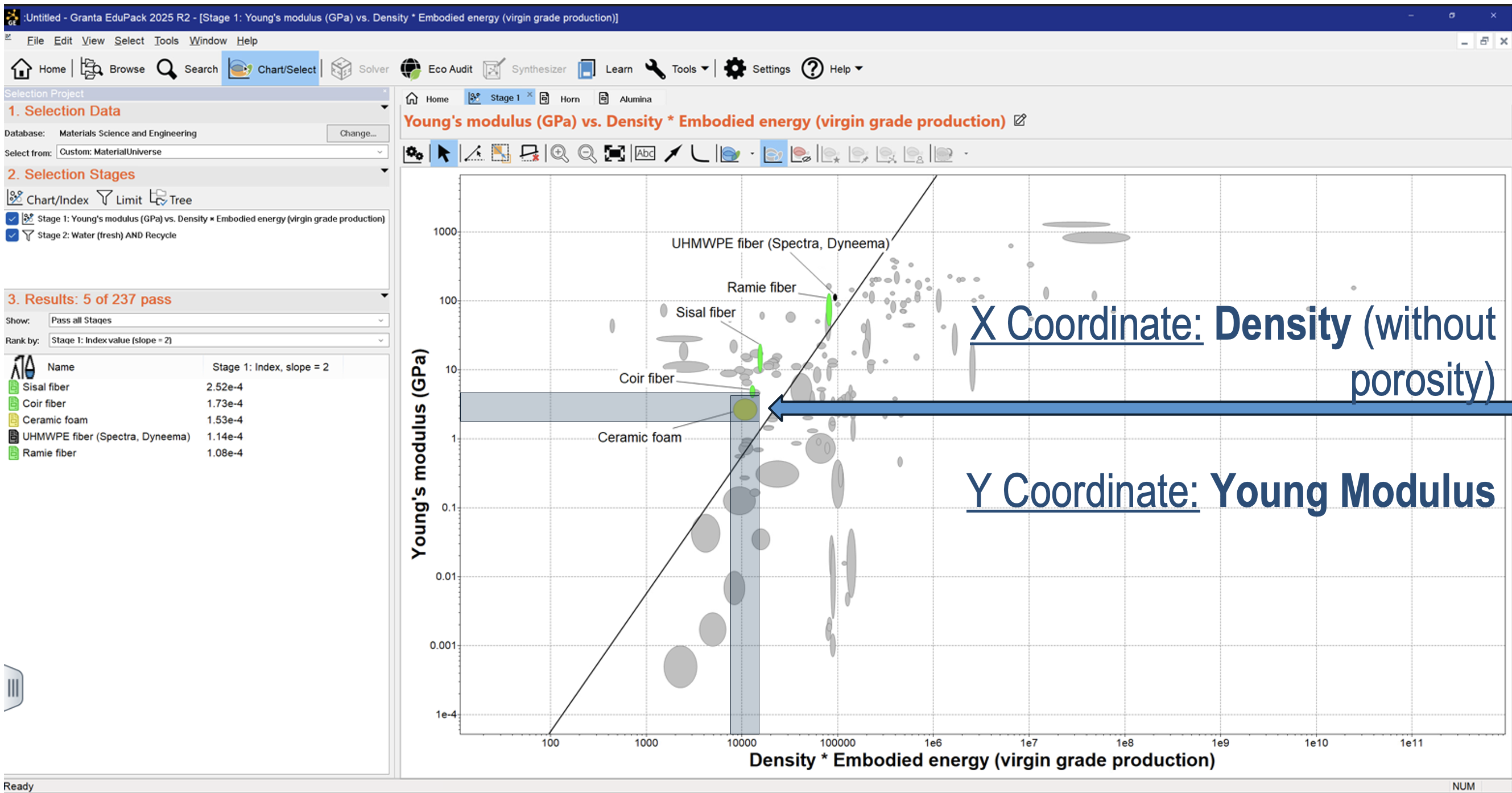
Compared candidate fibers (including Ramie, Coir, UHMWPE) and selected coir fiber through weighted decision criteria.
Porosity and Performance Checks
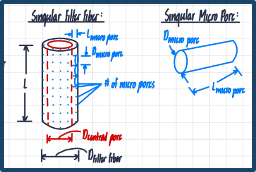
Calculated porosity conditions and validated stiffness relevance with Ashby-style reasoning after porosity adjustments.
Eco Audit and Lifecycle Thinking
Evaluated extraction, transport, and end-of-life impacts to support environmentally responsible engineering choices.
My Contributions (Manager Role - Shayan Siddiqui)
This was a team project; for Project 2 my role was Manager, and the points below highlight my contributions in that role.
- Scenario and objective framing: I helped structure our project goals for microplastic filtration and keep them measurable.
- Regulations and sustainability alignment: I contributed research on regulation context and sustainability constraints that shaped our decisions.
- Material-selection support: I took part in decision-matrix comparisons and porosity-based reasoning that supported the final coir choice.
- Team administration and milestone delivery: I helped keep weekly workflow organized and made sure milestone documentation stayed on track.
- Technical communication: I helped convert technical analysis into clear language for the final report and presentation.
Project 2 Reflection
What? So What? Now What?
"Project 2 changed how our team approached engineering trade-offs by forcing us to balance performance, sustainability, and regulation at the same time."
🔎 What?
The biggest moment for our team in Project 2 was when we narrowed down fiber options and realized each top option looked "best" depending on which metric we prioritized. We originally expected one material to dominate across every category, but our data showed real trade-offs between stiffness, density, sustainability indicators, and practical constraints. During decision-matrix and porosity discussions, we had to balance technical performance with environmental and regulatory context, not just maximize one value. That forced us to justify a balanced selection instead of chasing a single-metric winner.
🧠 So What?
This mattered because it changed our team mindset from "pick the strongest material" to "pick the most appropriate material for the whole system." We learned that sustainability-heavy engineering decisions are rarely black and white; they depend on transparent trade-offs, assumptions, and context. It also improved how we explain design choices. Instead of just saying a choice is good, we focused on showing why it is defensible against objectives, constraints, and lifecycle impacts.
🚀 Now What?
In future projects, I want to set objective weighting and decision criteria earlier so team trade-offs are visible from day one. I also plan to document assumptions and sensitivity checks more clearly, especially for sustainability and lifecycle inputs. My goal is to keep recommendations technically strong while making the reasoning easy for teams and stakeholders to audit and trust.
Design Process
Milestone-by-milestone progression from research to selection
Research and Objective Tree
Defined the scenario scope, reviewed filtration methods, and built our initial objective tree.
Metrics and Regulations
Set measurable objectives and aligned design constraints with Canadian regulations and compliance expectations.
Material Screening
Used Granta comparisons and MPI reasoning to rank candidate materials for filtration performance and durability.
Decision Matrix and Porosity
Narrowed to finalists, ran decision-matrix evaluation, and checked porosity-adjusted property suitability.
Eco Audit and Lifecycle Analysis
Assessed extraction, transportation, and end-of-life impacts to support sustainability-driven recommendations.
Key Design Decisions
Coir gave us the best overall balance of wet-environment durability, practical cost, sustainability, and suitable porosity-related behavior for our filtration target.
Our design decisions were informed by CEPA microbead regulation context and single-use plastic restrictions, with a clear focus on avoiding secondary pollution and maintaining measurable removal performance.
Transportation dominated lifecycle energy in several scenarios, while extraction energy and end-of-life potential changed depending on material pathway. This reinforced that logistics matter just as much as material properties.
Skills Developed
Technical and professional growth from Project 2
Technical Skills
Applied property comparisons and ranking logic to justify fiber selection decisions.
Used contaminant size and pore assumptions to evaluate filtration feasibility and stiffness implications.
Connected lifecycle considerations to engineering trade-offs in material and process planning.
Professional Skills
Worked through weekly agendas/action items to keep research, calculations, and documentation aligned.
Converted engineering analysis into presentation/report format with concise rationale and evidence.